Where the rain never falls and the sun never shines,
It's dark as a dungeon, way down in the mines.
Nothing, but nothing, epitomizes the greed of big corporations more than the innocuous-sounding "surface mining" that is destroying Appalachia just to pull more tons of filthy coal from the mountains. Filthy coal, that sends megatons of carbon emissions into the air along with other pollutants, filthy coal that Minnesota Power burns at Taconite Harbor and releases into our airshed, filthy coal that could within a decade or two choke all of us trying to breathe. This we knew, or at least True knew.
But the merger of Cleveland-Cliffs with the Appalachian coal mining company with the Orwellian name of Alpha Natural Resources makes us accomplices. Last year alone in Kentucky, 50 million tons of coal were dredged from the surface of the Appalachian mountain range by, among other methods, cutting off the tops of the mountains and throwing them down into the valleys. The mountaintops are called "overburden." I shit you not.
Compare this with the five million tons of magnetite pellets being produced annually by Northshore Mining, a subsidiary of Babbitt-based Cleveland-Cliffs, now to be known as Cliffs Natural Resources, "A Leading Diversified Mining and Natural Resources Company."
It is time for residents of northern Minnesota to admit their culpability. The mountaintop leveling now supported by the merged company surely ranks right up their with the proposed Polymet copper-nickel mine that will create dead zones in our watershed.
Where is your outrage, North Shore citizens? What will you leave of earth, water and air to your children? Here's a link to the Duluth Tribune story that conveniently glosses over the devastating truth:
Duluth News Tribune | Cleveland-Cliffs announces merger with Appalachian coal company in $10 billion deal
Showing posts with label North Shore. Show all posts
Showing posts with label North Shore. Show all posts
Wednesday, July 16, 2008


Thursday, June 26, 2008
| show details 10:38 AM (9 hours ago) |
|

"the rest of the story" about the sulfide copper-nickel mining industry
being proposed for northeastern Minnesota.
Info for; HR 4292: Superior National Forest Land Adjustment Act of 2007
To: http://www.twoharborsmn.com/
Subject: sulfide mining
Subject: sulfide mining
Lake County Chronicle
An inquisitive group of about 45 Lake and St. Louis County residents gathered last week at the Two Harbors Community Center, anxious to hear "the rest of the story" about the sulfide copper-nickel mining industry being proposed for northeastern Minnesota.
Local mass media has painted a rosy picture of jobs and economic growth coming from this new kind of mining. Not surprisingly absent in the mining propaganda are the grim realities of the toxic pollution problems inherently associated with the mining of sulfide ore bodies and the legacy of public-funded clean up costs to taxpayers, which number in the billions of dollars nationwide. Sulfide mining, also called non-ferrous metallic minerals mining and copper-nickel mining, is "not your father's mining". Its environmental impact greatly exceeds that of the iron and taconite mining we have all grown up with. Sulfide ore bodies, in which trace amounts of valuable metals are embedded, once exposed to air and water, generate sulfuric acid. Once this chemical process (Acid Mine Drainage) starts, it cannot be reversed and will continue for hundreds, and more likely thousands of years. Sulfuric acid runoff from the massive volume of waste rock piles and strip mine pits will leach into our surface waters and groundwater if not effectively controlled and treated. This kind of control has not yet been demonstrated. A metallic sulfide mine has never failed to pollute its watershed.
Our good neighbors in Wisconsin have found an effective control measure for sulfide mining. They have legislatively enacted a moratorium that will permit sulfide mining only after it has been demonstrated that it has been done elsewhere safely for 10 years and that such a mine has been closed for 10 years without any negative aftereffects. So far no company has been able to meet the criteria of this law. Minnesota has not yet adopted this kind of caution to protect our environment.
A new Canadian mining company, PolyMet is presently in the permitting process with Minnesota's DNR, including an environmental impact statement (EIS) which is due out soon, to be followed by a brief period of public input. The proposed mine site is just outside of Babbitt MN, and surrounded by the Partridge River, a Lake Superior tributary. If PolyMet is allowed to proceed, it will set off a ripple effect, with many other mining companies ready to pursue prospects of their own. These new mining prospects will expand mining into new areas of the Arrowhead country, including the Spruce Road area near Birch Lake, less than 1 mile from the BWCA. Settled areas such as the Bassett-Fairbanks community, could be next, with more than 9000 acres of 50-year mineral rights leases recently purchased from the state in that area.
Even though our iron mining industry is healthy, our politicians are anxious to bring even more non-diversified non-sustainable industrial growth to Minnesota's Arrowhead. Rep. James Oberstar has introduced a bill in the House to facilitate the sale of 6,700 acres of Superior National Forest land to PolyMet, without waiting for the results of the EIS, and without possibility of appeal of its authority or provisions. The bill, HR4292, sets a dangerous precedent of sale of such a large parcel of national forest land to a foreign, private industry without public input.
North Shore Watershed Watch and ACTNOW, the groups which organized this meeting, believe that the environmental problems such an industry would bring to our water-rich environment are not being adequately addressed or shared with the public. After viewing the evening's presentation, most of those in attendance, including residents who traveled from Brimson and Ely areas, agreed and were looking for ways to express their anger and frustration.
Other questions coming from the group which should be considered in deciding about the future of this industry in our state were: how long are the jobs generated locally likely to last? Do domestic or foreign companies stand to profit most from extraction of these minerals? Where are the markets for the minerals – we all use them, but would these be used domestically or go to China, India, etc.? What is the rush – the minerals aren't going anywhere are they? There will still be a market for them after however many years it takes to find out if they can be mined safely. Has there been an energy budget proposed for this industry? Given the rising cost and diminishing supply of energy, will it have to compete with the taconite industry for energy? And the taconite industry requires clean water – will they be working at cross purposes on that front too? You mean, I can't run over a cattail with my ATV, but a Canadian mining company can destroy a thousand acres of wetlands? So, this is like a grand experiment with our forests and water resources?
Will the financial benefit to today's generation be at the expense of tomorrow's generation? Only our descendants' will be able to answer that question.
Todd Ronning
Two Harbors MN
Saturday, June 21, 2008
Oppose Rep. Oberstar's HR 4292 Bill
Oberstar's HR 4292 is a "sellout": Selling Superior Forest land to Polymet for its disastrous proposed copper-nickel-palladium mine near Hoyt Lakes and within the Duluth area watershed:
Please link to this Duluth Tribune story by John Myers, who has written extensively on this issue, and let Rep. Oberstar know this sale of forest land to a private mining company with intent to destroy the environment is unacceptable.
-True
On the Internet
Bill sells Superior National Forest land to Polymet
John Myers Duluth News Tribune
Published Friday, June 06, 2008
Legislation in the U.S. House would sell 6,700 acres in the Superior National Forest to the Polymet copper company without an environmental assessment or public input. Link to bill ; http://www.govtrack.us/congress/billtext.xpd?bill=h110-4292 environmental review and environmental protections !
The federal land is precisely where the company hopes to mine for copper, nickel, platinum and palladium as early as next year.
It would be the first major sale of Superior Forest land to a private company.
The bill, HR 4292, introduced by U.S. Rep. Jim Oberstar, D-Minn., has not advanced in any committee.
Without legislation, the Forest Service is prohibited from selling any land to a private party, though exceptions are made for tracts smaller than 10 acres, said Jim Sanders, supervisor of the Superior National Forest.
Instead, the Forest Service usually trades land with property owners. The Forest Service has been negotiating with Polymet for about a year to exchange the land for other land in or near the Superior National Forest, Sanders said. But a land exchange of this size is more cumbersome, forcing Polymet to find multiple willing sellers, bargain over price and acquire purchase agreements.
The legislation would require the Forest Service to use money from the sale to buy private land of equal value in or near the Superior National Forest boundary. The bill exempts the land sale from a separate environmental review, but supporters note that an environmental review of the mining project is under way.
Supporters say the bill simply speeds up the process of trading the mine land for other forested land.
“The legislation gets us to the same end, the same result as a land exchange,” Sanders said. “It’s the same value, the same appraisal process, whether it’s a sale or exchange.”
Selling the land directly to Polymet probably would speed up the process by a year or so because it avoids the environmental assessment required with a land exchange and allows the Forest Service to deal with directly with willing sellers.
“We think it avoids a lot of duplication on the environmental assessment. … And it saves a lot of time and effort for both us and the Forest Service,” said Latisha Gietzen, Polymet vice president of public, environmental and government affairs.
Mineral rights vs. land ownership
Sanders said the Forest Service purchased the land from U.S. Steel in the 1930s but has never owned the mineral rights below the surface. Polymet controls those mineral rights.
Polymet officials say they had been moving ahead with mining plans, assuming their mineral rights “superseded” surface ownership, Gietzen said. Regional U.S. Forest Service officials last year informed the company that they didn’t hold the same legal opinion.
Rather than battle it out, the two sides agreed on the legislation to sell the land, Gietzen said. But if that fails, the company still could try to sue the government to gain access to the minerals.
“We certainly can challenge their opinion. … But nobody wants to go that route,” Gietzen said.
Because the 6,700 acres is surrounded by mining-related activities — a railroad to the south and an active taconite mine to the north — Sanders said it makes sense to sell the land and use the proceeds to buy other, more environmentally sensitive land closer to the heart of the forest.
The forest covers more than 3 million acres; about 2 million of that is owned by the federal government. There are hundreds of tracts of private, state and county-owned land within the forest boundaries.
Sanders said he is eying private land in the Kawishiwi River area, near Trout Lake, the Fernberg corridor and near Mud Lake, where landowners are willing to sell and where “it makes sense to consolidate our holdings.”
But critics of copper mining in the north woods say the legislation seems to offer a special deal to the mining company.
The land in question includes undeveloped forest and 1,200 acres of wetlands, said John Doberstein of Duluth, chairman of the Mining Without Harm committee of the Minnesota Sierra Club. The bill was introduced in December with no announcement.
“Not only does the bill exempt them from doing an Environmental Impact Statement [on the sale], it also sets a dangerous precedent of taking public land and transferring it to a private company for their profit without any public input,” Doberstein said. “This really seems to fast-track the land sale for the convenience of the company, without any regard whether this is the right thing to do with the forest.”
Critics say that copper mines in other areas of the world have almost always brought extreme environmental problems.
John Schadl, an Oberstar spokesman, said the bill was introduced at the request of the Forest Service and Polymet to speed the company toward mining operations.
“It’s an effort to expedite the process but still do it in an environmentally sound way,” Schadl said. “And the bill as it is now [will] not be the same bill that moves. … There will be some changes.”
No Senate version has been introduced yet.
Congressional action to sell national forest land to private parties is not unheard of, Sanders said. About a dozen such bills have been passed in the past decade, he said.
Polymet would be Minnesota’s first copper-nickel mine. But Polymet is only one of several companies eyeing rich deposits of copper, nickel, platinum and palladium under northern Minnesota forests and lakes. The interest is being sparked by record-breaking prices for those minerals and new technology that make it easier to separate copper from other rock.
Polymet is the farthest along toward developing those minerals and has purchased land, processing equipment and buildings from the former LTV Mining site near Hoyt Lakes. The company’s proposed open pit mine on federal property is several miles away toward Babbitt and would be connected by railroad to the processing plant.
http://www.sosbluewaters.org
Alert on HR 4292: Superior National Forest Land Adjustment Act of 2007
This bill would sell Superior National Forest public land to a mining company in order to avoid public
HR 4292 mandates a sale of approximately 6,700 forested/wetland acres of Superior National Forest land near the Boundary Waters Canoe Area Wilderness, to PolyMet, Inc., a Canadian company hoping to open the first metallic sulfide copper strip mine in Minnesota. The U.S. Forest Service owns the surface rights to the land, but not the mineral rights. The underlying purpose of this bill would be to benefit the mining company by eluding steps in the standard land exchange process which includes public comment and environmental review.
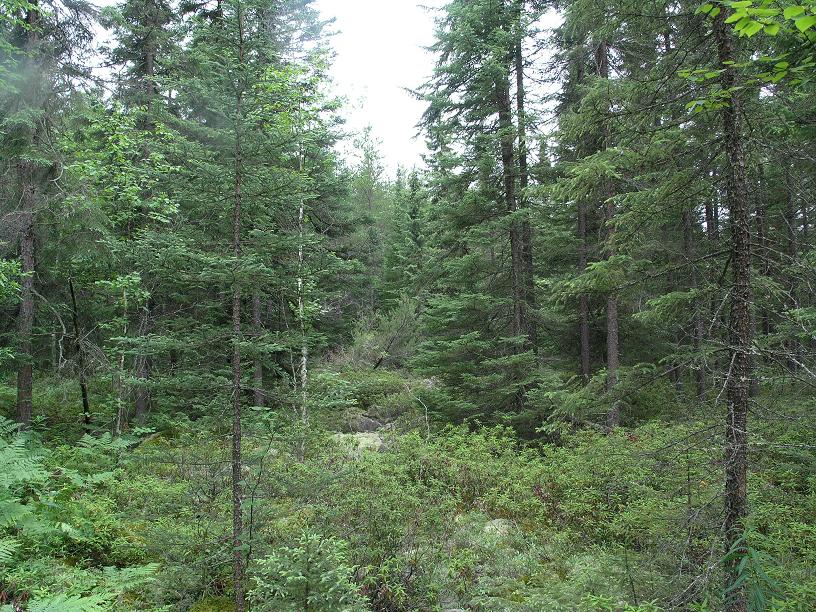
Progressing with land transfer before completion of the environmental process
According to HR 4292, the U.S. Forest Service would be given required to sell 6,700 acres of public land to PolyMet before completion of an Environmental Impact Statement (EIS). This is contrary to the National Environmental Policy Act (1969) and negates the purpose of the EIS, which is to allow for disclosure of environmental impacts of an action and for public input. There is an existing process for the Forest Service to exchange lands with private companies but exchange takes place after review that is open to the public in the form of an Environmental Impact Statement. This bill would circumvent that existing process.
This bill would also require the U.S. Forest Service to assume the responsibility for wetland replacement credits over a ten year period. The Army Corps of Engineers, in conjunction with the Forest Service, is responsible for assessing impacts and mitigation alternatives for wetlands as part of the PolyMet EIS process. In addition, the Wetland Conservation Act of Minnesota is intended to prevent further loss of wetlands within the State. Thus HR 4292 is contrary to both Federal and State law.
HR 4292 further disregards public input by specifically denying appeal of the outcome.
Special favors for mining companies
The U. S. Forest Service owns less than half of the mineral estate in the Superior National Forest and in the Boundary Waters Canoe Area Wilderness. Likewise, the Forest Service lacks mineral rights to many of its lands nationwide. This bill, if passed, could set precedence for the sale of public lands to private mining companies across the country. It would also open the doors for a dozen other mining companies who are currently exploring the Duluth Complex of rocks throughout Minnesota and other sulfide mineral deposits in the Upper Peninsula of Michigan. These sulfide-bearing rocks encompass an area that extends underneath the Boundary Waters Canoe Area Wilderness and between Voyageurs National Park and Lake Superior, before dipping down into the southern part of the state.
Ignoring potential harm to the environment
At the same time that a bill designed solely to help PolyMet bypass existing environmental and public disclosure law is being circulated through the halls of Congress, PolyMet is downplaying the potential effects of acid mine drainage. Sulfuric acid is a byproduct of metallic sulfide mining and in all previous mines required perpetual treatment of any affected watershed.
PolyMet spokesmen claim their company is "following all of Minnesota's environmental laws." HR 4292 seems contradictory to this statement.
Action requested Concerned citizens need to contact their U.S. representative, and Minnesota senators Amy Klobuchar and Norm Coleman in opposition to HR 4292. More specifically, citizens can request an explanation from Rep. Oberstar regarding the intention of this bill to circumvent current environmental law, to sell public land for private investment, and to ignore opportunity for public input as part of the environmental impact statement process.
Primary Contact;
Senator Amy Klobuchar http://klobuchar.senate.gov/
E-Mail: senator@klobuchar.senate.gov
Toll Free: 1-888-224-9043
302 Hart Senate Office Building
Washington, DC 20510
phone: 202-224-3244
fax: 202-228-2186
1200 Washington Avenue South, Suite 250
Minneapolis, MN 55415
Main Line: 612-727-5220
Main Fax: 612-727-5223
Toll Free: 1-888-224-9043
1134 7th Street NW
Rochester, MN 55901
Main Line: 507-288-5321
Fax: 507-288-2922
121 4th Street South
Moorhead, MN 56560
Main Line: 218-287-2219
Fax: 218-287-2930
Olcott Plaza, Suite 105
820 9th Street North
Virginia, MN 55792
Main Line: 218-741-9690
Fax:218-741-3692
Senator Norm Coleman http://coleman.senate.gov/
E-Mail coleman.senate.gov/index.cfm
Washington Office:
320 Senate Hart Office Building
Washington, DC 20510
Main: 202-224-5641
Fax: 202-224-1152
Scheduling: 202-228-1503
Minnesota Office in St. Paul:
2550 University Ave W, Suite 100N
St. Paul, MN 55114
Main: 651-645-0323
Fax: 651-645-3110
Toll Free: 800-642-6041
Minnesota Office in Mankato:
12 Civic Center Plaza
Suite 2167
Mankato, Minnesota 56001
Main: 507-625-6800
Fax: 507-625-9427
Minnesota Office in Grand Rapids:
200 Northbank Center 206B
Northeast 3rd Street
Grand Rapids, MN 55744
Main: 218-327-9333
Fax: 218-327-8637
Minnesota Office in Moorhead:
810 4th Avenue South
Suite 203
Moorhead, MN 56560
IEN news release
The Sale of Federal Lands to a Mining Company in the 1854 Treaty Area of Minnesota
Representative James Oberstar from Minnesota’s 8th congressional district has introduced HR 4292 in the U.S. House of Representatives. This act, titled - the Superior National Forest Land Adjustment Act of 2007 – would, require the Secretary of Agriculture to sell certain lands in Superior National Forest in Minnesota to Polymet Mining Company within 180 days of enactment. The act requires:
(1) The sale of 6,700 acres of Forest Service lands;
(2) The first offer for the sale of the lands under this Act is to be made to Poly Met Mining, Inc explicitly for the purposes of strip mining;
(3) Elimination of the requirement for public disclosure and environmental review under the National Environmental Policy Act (NEPA). Compliance under NEPA is usually met by the writing and review of an Environmental Impact Statement (EIS) that informs the Secretary, affected federally recognized Tribes, and the public about possible environmental impacts of a federal land exchange. A major environmental impact will be the mining company dredging or filling with mine waste 1,200 acres of wetlands included in this sale adjacent to the Partridge River, a tributary of the St. Louis River. The St. Louis River flows through the Fond du Lac Indian reservation on it’s way to Lake Superior.
(4) There can be no administrative appeal of the sale.
(5) The sale must take place within 180 days of the enactment of the act.
This legislation would create a precedent by which the Superior National Forest could sell public lands each time a mine gets close to the permitting phase of development. This act relieves the Forest Service from their responsibilities to protect public lands here in Minnesota. This could become a precedent elsewhere each time a federal land agency chooses to ignore it’s mandated management responsibilities on order to expedite mining operations.
Exchanges of federal land routinely happen all over the country. The Bureau of Land management and U.S. Forest Service conduct approximately three hundred land exchanges annually. There is a process delineated in law (the Federal Land Policy and Management Act of 1976) that describes how this happens for both Bureau of Land Management holdings as well as U.S. Forest Service. There is no need to introduce legislation that circumvents existing law. There is a time tested federal process in place that gives the Secretary of Agriculture, the public, and Federally Recognized Indian tribes input into the land exchange process. While this process does not guarantee that all concerns are addressed, it guarantees that concerns are heard. The proposed legislation would take away the right for all citizens as well as other state, tribal, and federal agencies to have their voices heard on this land exchange.
This sale will have, as yet, undetermined impacts on treaty-reserved rights in the 1854 treaty area. There will be both short-term significant environmental consequences in the form of filling or draining approximately 1,200 acres of wetland and long term environmental and water quality degradation in the form of discharge from large waste rock piles. Loss of wetlands coupled with runoff from the mine waste stored on this site can adversely affect water quality as well as other cultural, and natural resources for miles downstream from the mine site. Chemicals from existing iron mines have already been detected in the St. Louis River where it enters the Fond du Lac Indian Reservation.
Let the Minnesota congressional delegation know that there is no need to sell this Forest Service land as proposed in HR 4292; there is an existing land exchange process that should not be circumvented. Let them know that all U.S. citizens and the tribes in the region have a right to express their views on the fate of this land. Let them know that there is an existing process for this type of transaction and that you favor the use of that process.
The author of H.R. 4292, The Superior National Forest Adjustment Act of 2007, is:
Congressman James L Oberstar
Eighth Congressional District of Minnesota
Duluth Federal Building, Room 231
Duluth, Minnesota 55802
(218) 727-7474
TDD: (218) 727-7474
FAX: (218) 727-8270
or
2365 Rayburn House Office Building
Washington, DC 20515
(202) 225-6211
FAX: (202) 225-0699
http://www.oberstar.org
In the Senate, Amy Klobuchar is considering the introduction of companion legislation:
Senator Amy Klobuchar
1200 Washington Avenue South, Suite 250
Minneapolis, MN 55415
Main Line: 612-727-5220
Main Fax: 612-727-5223
or
302 Hart Senate Office Building
Washington, DC 20510
Phone: 202-224-3244
Fax: 202-228-2186
For additional information, contact Robert Shimek, IEN Mining Projects Coordinator, 218-751-4967
Letter to the Duluth News Tribune-
To the editor:
I am writing to inform readers about H.R. 4292, the Superior National Forest Land Adjustment Act of 2007, which is being sponsored by U.S. Representative James Oberstar. The sole purpose of this bill is to fast track a land sale between the U.S. Forest Service and PolyMet, Inc. in anticipation of the permitting of PolyMet’s proposed metallic sulfide mine near Hoyt Lakes.
The U.S. Forest Service would be given the authority to sell 6,700 acres of public forest land to PolyMet without any environmental review of the sale (which goes against current Federal law) and to assume the responsibility for wetland replacement credits over a ten year period (which goes against current wetland policy). Any administrative appeal would be denied. This bill would specifically help facilitate the permitting process for PolyMet.
The bill, if enacted, would also set a precedent for the selling of public land to private mining companies nationwide, based upon the fact that the U.S. Forest Service does not often hold the mineral rights to its lands.
Considering that PolyMet spokesmen claim they are asking for no favors and are following all of Minnesota’s environmental regulations, it seems a little strange that a bill designed solely for the benefit of PolyMet is currently circulating through the U.S. Congress.
At the same time, PolyMet is downplaying the effects of acid mine drainage, a problem associated with metallic sulfide mines, and which basically requires perpetual treatment. I believe it’s time for area citizens to take a closer look at the effects that the permitting of an entirely new mining industry will have upon the Arrowhead Region, and upon future generations.
Please let your elected officials know that you oppose this bill.
Sincerely,
Elanne Palcich
Chisholm, Minnesota
218-969-9557/218-254-3754
Blog-
6700 acres of Superior National Forest being sold to POLYMET mng, NO EIS, NO hearing
Why is the National Forest Service selling 6700 acres of SUPERIOR NATL FOREST, MN, to Polymet, with no EIS??
There is a bill in Legislature in Minnesota to allow the National Forest Service to sell, directly to Polymet mining, 6700 acres of Superior National Forest, with no public hearing, no Environmental Impact Statement, nothing. that land includes 1200+ acres of wetlands.
My question is: why would the NFS suddenly, with no notice, place a bill to sell DIRECTLY, with NO public input, land to a mining company, land...that is the publics land?
Incidentally, Polymet intends to, within 12 months, have an open pit mining operation in place and active in that land. Have you seen what damage an open pit copper mine DOES to the earth?
WHY ARE WE ALLOWING THIS?
Contact your fellow environmentalists and please, make this an issue of contention. Its important!!!
There is a bill in Legislature in Minnesota to allow the National Forest Service to sell, directly to Polymet mining, 6700 acres of Superior National Forest, with no public hearing, no Environmental Impact Statement, nothing. that land includes 1200+ acres of wetlands.
My question is: why would the NFS suddenly, with no notice, place a bill to sell DIRECTLY, with NO public input, land to a mining company, land...that is the publics land?
Incidentally, Polymet intends to, within 12 months, have an open pit mining operation in place and active in that land. Have you seen what damage an open pit copper mine DOES to the earth?
WHY ARE WE ALLOWING THIS?
Contact your fellow environmentalists and please, make this an issue of contention. Its important!!!
Representative Jim Oberstar http://www.oberstar.house.gov//
| D.C. Office 2365 Rayburn HOB Washington, D.C. 20515 (202) 225-6211 | Duluth Office 231 Federal Building Duluth, MN 55802 (218) 727-7474 | Chisholm Office City Hall, 316 Lake St. Chisholm, MN 55719 (218) 254-5761 | Brainerd Office City Hall, 501 Laurel St. Brainerd, MN 54601 (218) 828-4400 | North Branch Office 38625 14th Ave., Ste. 300B North Branch, MN 55056 (651) 277-1234 |
Contacting Office of the Governor http://www.governor.state.mn
To contact Governor Tim Pawlenty and Lt. Governor Carol Molnau, please write, phone, fax or e-mail.
Mailing Address:
Office of the Governor
130 State Capitol
75 Rev. Dr. Martin Luther King Jr. Blvd.
St. Paul, MN 55155
Other ways to reach our office:
Telephone: (651) 296-3391
Toll Free: (800) 657-3717
Facsimile: (651) 296-2089
E-mail: tim.pawlenty@state.mn.us
First District
Congressman Timothy J Walz(DFL)
| Washington, DC Office: | Manakato Office: | Rochester Office: |
E-Mail:
Web site: http://walz.house.gov
Second District
Congressman John Kline (R)
| 101 E. Burnsville Parkway, Ste 210 Burnsville, MN 55337 952-808-1213 Fax 952-808-1261 | 1429 Longworth House Office Building Washington, DC 20515 202-225-2271 Fax 202-225-2595 |
Internet e-mail: http://www.house.gov/writerep/
Web site: http://www.house.gov/kline/
Third District
Congressman Jim Ramstad (R)
| 1809 Plymouth Rd S, Suite 300 Minnetonka, MN 55305 952-738-8200 Fax: 952-738-9362 | 103 Cannon House Office Bldg Washington DC 20015 202-225-2871 Fax: 202-225-6351 |
E-mail: mn03@mail.house.gov
Web site: http://www.house.gov/ramstad
Fourth District
Congressman Betty McCollum (DFL)
| 165 Western Ave N, Suite 17 St. Paul, Minnesota 55102 651-224-9191 Fax: 651-224-3056 | 1029 Longworth House Office Bldg Washington DC 20515 202-225-6631 Fax: 202-225-1968 |
E-Mail: http://www.mccollum.house.gov
Web site: http://www.house.gov/mccollum/
Fifth District
Congressman Keith Ellison (DFL)
| 2100 Plymouth Avenue North Minneapolis, MN 55411 Phone: (612) 522-1212 Fax: (612) 522-9915 | 1130 Longworth House Office Building Washington, DC 20515 Phone: (202) 225-4755 Fax: (202) 225-4886 |
E-Mail:
Web site: http://ellison.house.gov/index
Sixth District
Congressman Michele Bachmann (R)
| 6043 Hudson Rd | 412 Cannon House Office Building Washington, DC 20515 Phone: (202) 225-2331 |
E-mail:
Web site: http://bachmann.house.gov
Seventh District
Congressman Collin Peterson (DFL)
| 714 Lake Ave Ste 107 Detroit Lakes MN 56501 218-847-5056 Fax: 218-847-5109 | 320 S Fourth St, Centre Point Mall Willmar, MN 56201 320-235-1061 Fax: 320-235-2651 |
| Minnesota Wheat Growers Bldg 2603 Wheat Dr Red Lake Falls MN 56750 218-253-4356 Fax: 218-253-4373 | 2159 Rayburn House Office Bldg Washington DC 20515 202-225-2165 Fax: 202-225-1593 |
E-Mail: tocollin.peterson@mail.house
Web site: http://www.house.gov/collinpete
Copyright 2008 Save Our Sky Blue Waters, All Rights Reserved
Saturday, June 14, 2008
The World's Longest ATV Parade is here!
WebEvent: Show Single Event
This link gives you all the skinny on that hoped-for world-record-breaking parade of ATVers gathered in Silver Bay today. That's right folks, today. They're expecting 2,500 people from all over the country, loud and proud, to ride some 50 miles of trails and play lots of fun games and churn up some topsoil and spew some fumes into the air.
It's the 25th anniversary of the All-Terrain Vehicle Association of Minnesota. Reason enough to bring out the storm troopers, last gathered two years ago in Harlan County, Kentucky, that bastion of coal mining greed where moutaintops are getting cut off and thrown down. A little ATV erosion seems but a small thing next to that, n'est-ce pas?
Here's where the rest of the world discovers the newest ATV destination: the North Shore!
This link gives you all the skinny on that hoped-for world-record-breaking parade of ATVers gathered in Silver Bay today. That's right folks, today. They're expecting 2,500 people from all over the country, loud and proud, to ride some 50 miles of trails and play lots of fun games and churn up some topsoil and spew some fumes into the air.
It's the 25th anniversary of the All-Terrain Vehicle Association of Minnesota. Reason enough to bring out the storm troopers, last gathered two years ago in Harlan County, Kentucky, that bastion of coal mining greed where moutaintops are getting cut off and thrown down. A little ATV erosion seems but a small thing next to that, n'est-ce pas?
Here's where the rest of the world discovers the newest ATV destination: the North Shore!
Tuesday, May 20, 2008
White trash go for Hillary
Dear True,
I grew up in the Kentucky mountains of Appalachia. So I know from White Trash. They don't want no "Boy" to be president and so they cut off their own faces to vote against him. Obama is the only candidate who cares about the working poor. Hillary? Ha! She is the working rich. She and Hubby sent zillions of good jobs overseas with their trade agreements.
But the White Trash of Kentucky, Tennessee and West Virginia hear from the pulpit how to vote and it ain't for the only guy who cares about them.
A terrifying parallel exists between Appalachia and Northeastern Minnesota. Both are victims of big coal, big mining. In Kentucky the beautiful mountains of my childhood are being cut off at the top to get more coal. The debris of the dynamiting and destruction are plunged into the watershed; toxic chemicals are re-named as the bland label "fill." So it well may be here in Minnesota if Polymet goes ahead with a new copper mine that leaches into the St. Louis county watershed and ultimately creates a new dead zone where life just doesn't go on.
Ya, the White Trash of the South and the dumb shits of the Northeast either don't know or don't give a shit that their lands and waters are being destroyed by big money interest to whom both Clinton and McCain are beholden. BUT, here at least we like Obama. Down there they won't ever, ever vote for a "Boy."
A "Sub-deb" from Kentucky (meaning I was White but not Trash)
PS If it is True that 56 percent of Minnesotans approve of "Pawlenty for the Rich" who was in large part responsible for the Minneapolis bridge collapse and our tanking economy, well I guess you get the government you deserve.
I grew up in the Kentucky mountains of Appalachia. So I know from White Trash. They don't want no "Boy" to be president and so they cut off their own faces to vote against him. Obama is the only candidate who cares about the working poor. Hillary? Ha! She is the working rich. She and Hubby sent zillions of good jobs overseas with their trade agreements.
But the White Trash of Kentucky, Tennessee and West Virginia hear from the pulpit how to vote and it ain't for the only guy who cares about them.
A terrifying parallel exists between Appalachia and Northeastern Minnesota. Both are victims of big coal, big mining. In Kentucky the beautiful mountains of my childhood are being cut off at the top to get more coal. The debris of the dynamiting and destruction are plunged into the watershed; toxic chemicals are re-named as the bland label "fill." So it well may be here in Minnesota if Polymet goes ahead with a new copper mine that leaches into the St. Louis county watershed and ultimately creates a new dead zone where life just doesn't go on.
Ya, the White Trash of the South and the dumb shits of the Northeast either don't know or don't give a shit that their lands and waters are being destroyed by big money interest to whom both Clinton and McCain are beholden. BUT, here at least we like Obama. Down there they won't ever, ever vote for a "Boy."
A "Sub-deb" from Kentucky (meaning I was White but not Trash)
PS If it is True that 56 percent of Minnesotans approve of "Pawlenty for the Rich" who was in large part responsible for the Minneapolis bridge collapse and our tanking economy, well I guess you get the government you deserve.
Wednesday, May 14, 2008
New mining industry leaves Arrowhead wetlands vulnerable
MinnPost
New mining industry leaves Arrowhead wetlands vulnerable
By Elanne Palcich
Tuesday, May 13, 2008
In the late 1800s, the U.S. government claimed the land of Minnesota, and pushed the indigenous people onto reservations. The huge pine forests of northern Minnesota were cut, red earth was discovered, and immigrants from a variety of struggling northern and southern European nations moved in to become workers for the mining companies.
While the Iron Range continues to be mined, following bands of taconite rock, the Arrowhead region of Minnesota escaped the mining process. Some of the northern counties were in large part wetlands, while others remained forestland. The Arrowhead region became known for its lakes and for the quality of outdoor recreational opportunities — the vacation land of the north, where campers "hear the lapping waters, hear the whispering of the pine trees."
These northern wetlands escaped the destruction that occurred as the rest of the state turned urban or agricultural.
Scientists know that wetlands have evolved over the past 10,000 years, since the recession of the last glaciers. We also know now that wetlands sequester carbon — and that destroying wetlands releases carbon that has been stored over centuries. There is evidence that global climate change is literally being fueled by the burning of fossil fuels and the accompanying release of CO2 into the air.
A new threat in the Arrowhead
Minnesota's wetlands may hold the key to moderating climate change on a local level, except for one thing: the threat of an entirely new mining industry poised to begin in the Arrowhead.
The industrialization of the burgeoning populations of China and India is driving demand and prices for copper, nickel, platinum, and gold — precious metals bonded within sulfide ores throughout the Duluth Complex, the underlying rock formation of the Arrowhead Region.
These precious metals are very low grade — 0.4 percent copper, 0.1 percent nickel and 0.01 ounces per ton of platinum, palladium, and gold. But the current price is enough to bring a half-dozen Canadian companies into the Arrowhead, exploring in an unregulated fashion and pulling every political string for funding and support.
The international balance of economic power is changing. Just three generations after the take-over of native lands by extractive industries, Canadian companies are seeking to turn the remaining Arrowhead Region into a colonial outpost for China and India. For basically a handful of jobs, we are turning over our land and our culture so that Canadian companies and their shareholders can earn fantastic sums on precious metals while our workers will receive $40,000-a-year nonunion wages (translate into no pension and no health care) based on the price of copper. And when the price of copper drops, or the precious-metals market collapses, or the price of diesel fuel makes mining uneconomical, the Canadian companies will pull up stakes and leave northern Minnesota with an acid-mine drainage problem requiring perpetual treatment — almost forever.
No way to replace lost wetlands
The Arrowhead region of northern Minnesota is our Arctic National Wildlife Refuge. It's our Brazilian rainforest. It is the equivalent of the remaining special places left on each continent, in each country. When we lose our wetlands, there is no way to replace them. There is no way to reconstruct a process that took thousands of years to form. There is no way to recapture the carbon released when wetlands are destroyed. There is no way to rebuild the wildlife habitat and plant communities that will be eliminated.
At the same time, this new mining industry would spew hundreds of thousands of tons of CO2 into the air, further contributing to global warming.
Consider, too, that the Arrowhead is just the first piece of the metallic sulfide pie. While exploration is progressing in the Birch Lake area, along the Kawishiwi River, Partridge River, and the St. Louis River, companies are also exploring along the Rainy, Pigeon, Root, Minnesota and Mississippi Rivers, the Mille Lacs area, in the Big Sandy Watershed (Aitkin County), and in Carlton County.
Bill would set a precedent
In the meantime, U.S. 8th District Rep. James Oberstar has introduced a bill in Congress (H.R. 4292, the Superior National Forest Land Adjustment Act of 2007) that would fast track a land sale between the U.S. Forest Service and Polymet, Inc., in anticipation of the permitting of Polymet's proposed metallic sulfide mine near Hoyt Lakes. While this bill singles out Polymet for special treatment, it would also set a precedent for the selling of public lands to private mining companies nationwide, or wherever the Forest Service does not own the mineral rights. Much of the mineral estate in Superior National Forest and the Boundary Waters is owned by mining interests, not the Forest Service. What implications might this have for the future?
What exactly are those of us living here thinking? Are we in denial regarding the ecological degradation that is taking place on a global scale and how this is going to affect our future? Are we naive enough to believe propaganda about clean mining technology that is being pushed upon us by mining-company spokesmen who are set to receive huge bonuses once the sulfide industry gets up and running?
Or are we going to believe in our own ability to create an alternative future that allows us to finally acknowledge the true heritage of the Arrowhead Region — that of living in harmony with the land?
Elanne Palcich, a retired elementary school teacher, lives in Chisholm, Minn.
Friday, February 29, 2008
Ta da! Here comes the world's biggest ATV parade
The Cook County Star has announced that our ATV club is "recruiting ATV enthusiasts" to attend a hopefully record-breaking ATV parade in Silver Bay on June 14th. So much for "just wanting a place for locals to ride their ATVs around."
ATV clubs from around the state will be trying to make the North Shore the premier destination for the nation (and the world?). You can trust this info, it came from the horse's (I mean the ATV's) mouth.
True
ATV clubs from around the state will be trying to make the North Shore the premier destination for the nation (and the world?). You can trust this info, it came from the horse's (I mean the ATV's) mouth.
True
Wednesday, February 13, 2008
Great Lakes pollution threatens public health
Government Suppresses Major Public Health Report
By Maggie Mahar
AlterNet
By Maggie Mahar
AlterNet
Tuesday 12 February 2008
The public has been denied important information on the link between pollution and health problems including lung, colon and breast cancer.
This article originally appeared on Health Beat.
The Center for Public Integrity, a public interest investigative journalism organization, has obtained copies of a Centers for Disease Control and Prevention (CDC) study of environmental and health data in eight Great Lakes states that was scheduled for publication in July 2007. The report, which pointed to elevated rates of lung, colon, and breast cancer; low birth weight; and infant mortality in several of the geographical areas of concern has not yet been made public.
A few days before the report was slated to be released, it was pulled. Meanwhile, at precisely the same time, its lead author, Christopher De Rosa, has been removed from the position he held since 1992. The Center for Public Integrity is asking why.
The study, "Public Health Implications of Hazardous Substances in Twenty-Six U.S. Great Lakes Areas of Concern" was developed by the CDC's Agency for Toxic Substances and Disease Registry (ATSDR) at the request of the International Joint Commission, an independent U.S-Canadian organization that monitors and advises both governments on the use and quality of boundary waters.
The CDC report brings together two sets of data: environmental data on known "areas of concern" - including superfund sites and hazardous waste dumps - and separate health data collected by county or, in some cases, smaller geographical regions.
The study does not try to prove cause and effect. Instead, it outlines areas for further study and data collection on the link between pollution and health.
"Let's say we have a superfund site and we also find elevated risk of leukemia in the county - is that related? We don't know, but people living in the area can logically argue that we ought to find out," Dr. Peter Orris, a professor at the University of Illinois School of Public Health and one of the peer reviewers of the study told Oneworld.net.
Since 2004, dozens of experts have reviewed various drafts of the study, including senior scientists at the CDC, Environmental Protection Agency, and other federal agencies, as well as scientists from universities and state governments, according to consumeraffairs.com. Orris is just one of the several experts who reviewed the study and who, along with the International Joint Committee in a December letter to the CDC, have called for the report's publication.
Canadian biologist Michael Gilbertson, a second peer reviewer, told the Center for Public Integrity that he felt the findings were being suppressed because they were "inconvenient." On the record, he added: "The whole problem with all this kind of work is wrapped up in that word 'injury.' If you have injury, that implies liability. Liability, of course, implies damages, legal processes, and costs of remedial action. The governments, frankly, in both countries are so heavily aligned with, particularly, the chemical industry, that the word amongst the bureaucracies is that they really do not want any evidence of effect or injury to be allowed out there."
Orris also raised concerns that the publication may have been halted based on orders outside the CDC. Once again, it seems that the Bush administration is trying to shrink government by making sure that a federal agency doesn't do its job-a problem that I wrote about here in a post titled "The FDA- What Happens When You Starve the Beast." Corporate interests are protected-at the expense of the nation's citizens.
"I have an overall concern with respect to the culture of this administration, which permeates all levels of the scientific wing of the government," Orris said. "The administration has regularly cut funds so that they don't find statistics that could be potentially politically embarrassing - for instance, the sampling of toxins in fish in the Great Lakes has been cut way back."
"If the messenger doesn't come with the message, no one knows it's there," he added.
CDC spokesperson Bernadette Burden told OneWorld that the report was held back because internal and external reviewers - including the Environmental Protection Agency and several state health departments - identified "numerous discrepancies and deficiencies" and determined a rigorous review was needed. She added that the CDC plans to release the report after the review is completed, in "weeks rather than months."
Burden cited several examples of "discrepancies", including the fact that the county-level health data "reflected people's illnesses from 1988 to 1997, while much of the environmental data used in the report came from the EPA's Toxic Release Inventory dated 2001 and the National Pollutant Discharge Elimination system with 2004 data."
As Oneworld.net points out, CDC did not clarify why these issues were not identified until July 2007 despite several years of review.
A new director of CDC's National Center for Environmental Health and ATSDR, Howard Frumkin, was appointed in July 2007, shortly before the report was due to be released. He replaced De Rosa, who had served as director of the Division of Toxicology for fifteen years. De Rosa was named special assistant in Frumkin's office - a position that appears to carry "no real responsibilities" according to a Feb. 2008 letter from members of the Congressional Committee on Science and Technologies to CDC director Julie Gerberding. The letter called the move an apparent retaliation.
As many as 9 million people - including residents of Chicago, Cleveland, Detroit, and Milwaukee - may be at risk from exposure to pollutants including pesticides, dioxin, PCBs (Polychlorinated Biphenyls), and mercury, according to Sheila Kaplan, an investigative journalist who covered the story for the Center for Public Integrity.
Kaplan has read all three drafts of the study, from 2004 to 2007.
"It's important for this work to be followed up on," she told OneWorld. "What I hope from this report is that communities will say, 'We deserve to know this information and whether exposure to these chemicals and metals is killing us.' More work needs to be done."
You will find Kaplan's full report here.
Monday, August 06, 2007
Scrubbing the air
True hates ugly, smelly, polluting and global-warming coal plants. Minnesota Power's Tac Harbor project was reviewed in this Strib story. Two points of interest:
One, "air shed." This means the area covered by polluting toxic emissions from Tac Harbor and it covers all of Cook County including our national and state forests. The glowing PowerPoint presentations by MP don't really say much about this damage. They are basically trying to keep their filthy coal plant going far into the future by posing as cutting edge clean.
Two, "scrubbing" to reduce mercury and other toxic emissions has ZERO effect on global warming. Read the story below.
True
Scrubbing the air
One, "air shed." This means the area covered by polluting toxic emissions from Tac Harbor and it covers all of Cook County including our national and state forests. The glowing PowerPoint presentations by MP don't really say much about this damage. They are basically trying to keep their filthy coal plant going far into the future by posing as cutting edge clean.
Two, "scrubbing" to reduce mercury and other toxic emissions has ZERO effect on global warming. Read the story below.
True
Scrubbing the air
Thursday, June 21, 2007
Why am I not surprised?
Dear True,
I have been reading with interest the recent posts that taconite dust can cause cancer and that the public officials charged with public safety have withheld this information from workers.
Hmm, I just have one comment. This concerns the statements by some powers that be that there is no reason to suspect any culprit other than asbestos in the killer cancer.
I am a descendant of Appalachian coal miners from the Kentucky mountains. From my earliest memories I heard about "black lung disease." The lungs turn black from exposure to coal dust. Let's not quibble about coal, taconite, or asbestos. They all are poisonous.
Duh, it seems like a no-brainer to me. In the 50 years since my childhood, other poisons have entered the environment freely and what was once "only" a lung affliction has now turned to the deadliest cancer.
Nancye Belding
Grand Marais
I have been reading with interest the recent posts that taconite dust can cause cancer and that the public officials charged with public safety have withheld this information from workers.
Hmm, I just have one comment. This concerns the statements by some powers that be that there is no reason to suspect any culprit other than asbestos in the killer cancer.
I am a descendant of Appalachian coal miners from the Kentucky mountains. From my earliest memories I heard about "black lung disease." The lungs turn black from exposure to coal dust. Let's not quibble about coal, taconite, or asbestos. They all are poisonous.
Duh, it seems like a no-brainer to me. In the 50 years since my childhood, other poisons have entered the environment freely and what was once "only" a lung affliction has now turned to the deadliest cancer.
Nancye Belding
Grand Marais
Sunday, June 03, 2007
Minnesota’s ‘Freshwater Ocean’ Attracts a New Generation - New York Times
We have been discovered by the New York Times. They think it is a good thing. True thinks it sucks. The more rich fat cats who buy property here, the worse for us. They raise our taxes with their monster cabins, give nothing back to the community, and diminish our community infrastructure including schools and housing for locals. These carpetbaggers have been seen to move in to close-knit neighborhoods and put up "Keep Out" signs. Their vacation homes, on a par with royal castles, challenge the fragile boreal forest.
Their arrogance requires a service economy dedicated to their thoughtless needs: cleaning staff and groundskeepers.
In short, the objects of our tourism outreach are predators rather than assets to our community.
Read the story:
Minnesota’s ‘Freshwater Ocean’ Attracts a New Generation - New York Times
Their arrogance requires a service economy dedicated to their thoughtless needs: cleaning staff and groundskeepers.
In short, the objects of our tourism outreach are predators rather than assets to our community.
Read the story:
Minnesota’s ‘Freshwater Ocean’ Attracts a New Generation - New York Times
Tuesday, May 22, 2007
Oberstar Introduces Clean Water Legislation
More good work by Jim Oberstar on behalf of clean water; follow the link
Congressman James L Oberstar -- Oberstar Introduces Clean Water Legislation
Congressman James L Oberstar -- Oberstar Introduces Clean Water Legislation
Sunday, May 20, 2007
With New Embassy, US Presence in Iraq Appears Permanent
Hello, Cook County,
Thought you might like to know that the US is looking to a permanent presence in Iraq. Can you say, stolen oil revenues? permanent military bases? global imperialism?
Check out this story:
With New Embassy, US Presence in Iraq Appears Permanent
Thought you might like to know that the US is looking to a permanent presence in Iraq. Can you say, stolen oil revenues? permanent military bases? global imperialism?
Check out this story:
With New Embassy, US Presence in Iraq Appears Permanent
Friday, May 04, 2007
News Express » Archive » EDA requests affordable housing bids from local builders
True loves News Express, the on-line headline news posted to Boreal by the Cook County News Herald.
The local folks who asked the EDA and the Grand Marais City Council for a chance to bid on affordable housing projects have gotten their wish. It's not maybe as simple as they thought, navigating the mysterious realms of federal, state and private grant applications, mortgage lending, infrastructure costs, and the strict criteria set by the Minnesota Green Communities Initiative while still creating high quality affordable housing. The Land Trust model will also have to do duty here if the project has any chance of succeeding.
But, best of luck, locals. It would be a win for everybody if we had an affordable housing coalition of city, county and contractors to meet the needs of the half of residents who fall below the median income. Go for it.
News Express » Archive » EDA requests affordable housing bids from local builders
The local folks who asked the EDA and the Grand Marais City Council for a chance to bid on affordable housing projects have gotten their wish. It's not maybe as simple as they thought, navigating the mysterious realms of federal, state and private grant applications, mortgage lending, infrastructure costs, and the strict criteria set by the Minnesota Green Communities Initiative while still creating high quality affordable housing. The Land Trust model will also have to do duty here if the project has any chance of succeeding.
But, best of luck, locals. It would be a win for everybody if we had an affordable housing coalition of city, county and contractors to meet the needs of the half of residents who fall below the median income. Go for it.
News Express » Archive » EDA requests affordable housing bids from local builders
Thursday, May 03, 2007
WTIP North Shore Radio - 90.7 FM » Park board drops wetland identification and mapping proposal
Ah, so. The Grand Marais Park Board narrowly defeats a gentle and sustainable plan to explore, simply explore, identifying wetlands in the harbor. Who remembers that Grand Marais means "big swamp"?
Anyway, lots of folks would like to look further into this issue. And where's the harm in that? The city attorney has assured us that this won't bind the city to anything.
It makes True wonder, why? Is there some subtext here?
Check the story link:
WTIP North Shore Radio - 90.7 FM » Park board drops wetland identification and mapping proposal
Anyway, lots of folks would like to look further into this issue. And where's the harm in that? The city attorney has assured us that this won't bind the city to anything.
It makes True wonder, why? Is there some subtext here?
Check the story link:
WTIP North Shore Radio - 90.7 FM » Park board drops wetland identification and mapping proposal
Sunday, April 29, 2007
Sales tax reprise: county to hire lobbyist!
The Cook County board will spend up to $10,000 on a lobbyist to support the sales tax proposals currently wending their way through the legislature.
The board takes this step after hearing a lot of public criticism, including Yours Truly, against more sales taxes that are hardest on the poor.
Also, it comes after their knee-jerk response to the self-justifications and manufactured facts presented by the so-called Cook County Economic Analysis Council, a self-serving group that represents resort owners and others who consistently pay the lowest wages to their employees, so that they can fund yet MORE PR stuff on their own behalf than they already get from taxpayers. (See previous posts, including "Tourism sales: one-third or 82 percent?" Click on the labels for tourism, taxes, and economy.)
True thinks of forming a Cook County Bullshit Analysis Council, writing a more truthful and fact-checked report about the county's economy and our need to promote NON-tourism jobs, and making as much noise as the ATV and CCEAC folks.
As for the dropping the cap on the hospital levy, True does support this. It is a fair tax and we need our hospital. As for the so-called "infrastructure" tax, True agrees that we need infrastructure improvements in the county, but there are plenty of state and federal and private grant programs that ought to be looked at first. $10K would pay for a powerful lot of grantwriting. Moreover, the proposed improvements in the present version will all go to Grand Marais. West-Enders, a lot of whom didn't like the sales tax idea in the first place, will get shafted.
As for the three-percent recreation tax, the idea here seems to be that only tourists will be paying it. Not so, struggling young families will be paying it so their kids can have some fun.
VOTE NO on the one-percent referendum! But the ordinary citizen apparently won't even get a vote on the three-percent, if it passes the legislature. True calls this TAXATION WITHOUT REPRESENTATION! Only the CCEAC is represented, not the vast majority of voters and taxpayers.
The board takes this step after hearing a lot of public criticism, including Yours Truly, against more sales taxes that are hardest on the poor.
Also, it comes after their knee-jerk response to the self-justifications and manufactured facts presented by the so-called Cook County Economic Analysis Council, a self-serving group that represents resort owners and others who consistently pay the lowest wages to their employees, so that they can fund yet MORE PR stuff on their own behalf than they already get from taxpayers. (See previous posts, including "Tourism sales: one-third or 82 percent?" Click on the labels for tourism, taxes, and economy.)
True thinks of forming a Cook County Bullshit Analysis Council, writing a more truthful and fact-checked report about the county's economy and our need to promote NON-tourism jobs, and making as much noise as the ATV and CCEAC folks.
As for the dropping the cap on the hospital levy, True does support this. It is a fair tax and we need our hospital. As for the so-called "infrastructure" tax, True agrees that we need infrastructure improvements in the county, but there are plenty of state and federal and private grant programs that ought to be looked at first. $10K would pay for a powerful lot of grantwriting. Moreover, the proposed improvements in the present version will all go to Grand Marais. West-Enders, a lot of whom didn't like the sales tax idea in the first place, will get shafted.
As for the three-percent recreation tax, the idea here seems to be that only tourists will be paying it. Not so, struggling young families will be paying it so their kids can have some fun.
VOTE NO on the one-percent referendum! But the ordinary citizen apparently won't even get a vote on the three-percent, if it passes the legislature. True calls this TAXATION WITHOUT REPRESENTATION! Only the CCEAC is represented, not the vast majority of voters and taxpayers.
Saturday, April 28, 2007
DFL-led House OKs shift in tax burden, Pawlenty promises veto
Governor Tim Pawlenty, best known for a swell haircut, a toothy smile and a total lack of understanding of Minnesota history and values, has promised to veto a House bill shifting some of the state's tax burden to those who can afford it.
Dear old Hubert H. Humphrey, our long-winded and well-beloved former Vice President, who faithfully spoke his joyful message at DFL bean feeds, would be glad today at the House vote. Paul Wellstone, the people's senator, would be jumping up and down with joy.
Minnesota has (until the bad old Reagan years) always been about its people, its workers, its children and their collective well being. AND also, about supporting local governments and schools so the big tax burdens don't fall on the few.
True is proud to provide the link to this story from the Strib. Hopefully people in Cook County will recognize that the old Minnesota way that produced a great way of life is still the best way.
Read on:
DFL-led House OKs shift in tax burden
Dear old Hubert H. Humphrey, our long-winded and well-beloved former Vice President, who faithfully spoke his joyful message at DFL bean feeds, would be glad today at the House vote. Paul Wellstone, the people's senator, would be jumping up and down with joy.
Minnesota has (until the bad old Reagan years) always been about its people, its workers, its children and their collective well being. AND also, about supporting local governments and schools so the big tax burdens don't fall on the few.
True is proud to provide the link to this story from the Strib. Hopefully people in Cook County will recognize that the old Minnesota way that produced a great way of life is still the best way.
Read on:
DFL-led House OKs shift in tax burden
Thursday, April 26, 2007
ATV Reprise: USFS and Cook County Roads
True's mailbox includes a packet from the U.S. Forest Service about their proposed OHV (ATV) trails and asking for public comment. With chagrin, he notes that the public comment period ended today.
Still, True has read and studied the USFS scoping document as well as their maps and he thanks our Tofte and Gunflint ranger staff for making this process very open, for coming to town and county meetings, for mailing out information to interested parties such as Yours Truly. He is impressed at the effort to close dead-end trails, reclassify roads, and create trails to move from the lower to the upper forest. Okay, he (I) don't like or want ATVs over-running our county but if they must and will come here let them come to designated trails. As Tofte district ranger John Wytanis put it, "We are not going to allow everything, and we are not going to allow nothing."
But, unfortunately, on the ATV issue most all of the comments come from the ATVers themselves. Notably, a four-page document was submitted by the local ATV club recommending additional trails to be opened. Ugga bugga boo.
For most of us, the USFS plan is a compromise we can reluctantly live with, but not for the hard-core folks who like to enjoy the environment by destroying it. This puts me in mind of nasty little boys who tear the wings off of butterflies because they just don't SEE anything outside their personal ego demands for instant gratification.
Metaphors aside, a more serious ATV issue looms on the horizon, that being permission to ride on virtually all county roads. Last time the county had a public hearing at least two-thirds of those attending were strongly pro-ATV. Next time, who knows? We have a statewide lobby that would just love to devour Cook County as an ATV destination.
Commissioner Jim Johnson has promised to vote against the Open Season ATV Plan (because his constituents are adamantly opposed) but most of them, like politicos everywhere, are just watching to see which way the wind blows. Commissioner Bruce Martinson, at least, has been vocal in his reports to his West End constituency about all of the issues in play here; his personal concern is safety.
True (aka yours truly) admits that there will be an increased ATV presence here in Cook County and hopes that if enough folks who love the peace and quiet of the woods, or even enough folks who understand that the economy will suffer if the ATVers take over the woods, will speak out in time to make a difference, in time to set limits we can live with.
Still, True has read and studied the USFS scoping document as well as their maps and he thanks our Tofte and Gunflint ranger staff for making this process very open, for coming to town and county meetings, for mailing out information to interested parties such as Yours Truly. He is impressed at the effort to close dead-end trails, reclassify roads, and create trails to move from the lower to the upper forest. Okay, he (I) don't like or want ATVs over-running our county but if they must and will come here let them come to designated trails. As Tofte district ranger John Wytanis put it, "We are not going to allow everything, and we are not going to allow nothing."
But, unfortunately, on the ATV issue most all of the comments come from the ATVers themselves. Notably, a four-page document was submitted by the local ATV club recommending additional trails to be opened. Ugga bugga boo.
For most of us, the USFS plan is a compromise we can reluctantly live with, but not for the hard-core folks who like to enjoy the environment by destroying it. This puts me in mind of nasty little boys who tear the wings off of butterflies because they just don't SEE anything outside their personal ego demands for instant gratification.
Metaphors aside, a more serious ATV issue looms on the horizon, that being permission to ride on virtually all county roads. Last time the county had a public hearing at least two-thirds of those attending were strongly pro-ATV. Next time, who knows? We have a statewide lobby that would just love to devour Cook County as an ATV destination.
Commissioner Jim Johnson has promised to vote against the Open Season ATV Plan (because his constituents are adamantly opposed) but most of them, like politicos everywhere, are just watching to see which way the wind blows. Commissioner Bruce Martinson, at least, has been vocal in his reports to his West End constituency about all of the issues in play here; his personal concern is safety.
True (aka yours truly) admits that there will be an increased ATV presence here in Cook County and hopes that if enough folks who love the peace and quiet of the woods, or even enough folks who understand that the economy will suffer if the ATVers take over the woods, will speak out in time to make a difference, in time to set limits we can live with.
Monday, April 23, 2007
Congressman James L Oberstar -- Water Resources Bill Benefits Minnesota
Grand Marais harbor redesign by the Army Corps of Engineers in included among the billions of dollars funding water resources passed last week in the House of Representatives. Follow the link to read more:
Congressman James L Oberstar -- Water Resources Bill Benefits Minnesota
Congressman James L Oberstar -- Water Resources Bill Benefits Minnesota
Thursday, March 29, 2007
True Exclusive: Lutsen town plan
Lutsen Meeting Minutes from Tuesday 3-27-07
Thank you to everyone who attended Tuesday night's meeting!
We have just posted our concepts/drawings on our server. Follow this link:
http://www.tc.umn.edu/~cland/
There will be two folders labeled 11x11 and 8x8. This refers to the size of the drawing so you can either print them out on 11x17 or 81/2x11 if you wish. Inside the folders will be pdf files of all of our boards. Let me know if you have any technical difficulties. Please remember that this work is preliminary. We have posted it so people can refer back to it and ask any additional questions or give us additional comments on the work. For those who could not attend the meeting the drawings will help you have a better understanding of the meeting minutes. We will will be re-shaping the work for a final presentation that will be scheduled for sometime in June.
I have attached the meeting minutes in a word document and also pasted it below.
Again, if you have any additional questions or comments please feel free to call or email.
Nichole Schlepp
Design Coordinator
Center for Changing Landscapes
University of Minnesota
612-624-2976
schl0482@umn.edu
Lutsen Meeting Minutes 3.27.07:
A steering committee workshop was held in February. In that meeting we received many comments/inputs on the Gitchi Gami Trail alignment through Lutsen , discussed some town center concepts, and received feedback on what people saw as the character of Lutsen and the potential character of a future town center. Based on that meeting we were able to refine our concepts and present them Tuesday night at a preliminary design meeting held in the Lutsen Church basement. Here are the topics that were presented/discussed at Tuesday night’s meeting:
1. Gitchi Gami Trail:
-An existing regional trail map was shown that spanned from the Poplar River to the Caribou Trail. The DNR has funding for the trail and an alignment with property owners’ consent to Arrowhead Electric. This portion of the trail was shown as a solid line on the map. It is in the power line corridor after crossing Poplar River and then makes its way to the right-of-way along Highway 61 before reaching Arrowhead Electric.
From this point the trail was shown as a dashed line and split into two options along the right-of-way: one is on the north side and one is on the south side of the highway.
2. Zoning and Linear Systems:
-A map of the existing town center from Arrowhead Electric to Lutsen Church was shown with dashed lines for the Gitchi Gami Trail on the north and south side of the highway.
-Town Center ‘Gateway’ locations were shown to the west of Arrowhead Electric and to the east Lutsen Church. This is where the speed could drop to 30 m.p.h,, town center signage would be placed, there could possibly be curb and gutter along the highway, ‘Town Center Plantings’ could be incorporated helping to signify that you are entering the town center of Lutsen.
-Zoning as specified from Lutsen’s town plan is also shown on this map. One of the only changes we would be suggesting is that in the ‘LGC’ area the density could be more than .25/acre with an option for single-family residential to enter this area as ‘Town Center Housing’.
-Within the ‘LGC’ area a thicker red line was drawn indicating our ‘Town Center Study” area. This line is carried out through the town center concept drawings as well.
-A section line (in red) was cut just to the east of Lutsen Church for studying the highway/frontage road/Gitchi Gami trail spacing.
3. Highway/Frontage Road/Gitchi Gami Trail Section Studies
-Section studies were cut at a pinch point east of the Lutsen Church where a home is approx. 12’ from the R.O.W.
The studies shown were: existing conditions, a very ‘bare minimum’ MNDOT typical rural section at 40 m.p.h., a curb and gutter option at 30 m.p.h., and a section showing the trail on the south side.
From these studies it was apparent that there is more room on the north side (100’ of R.O.W.) of the highway for a frontage road and/or trail. On the south side there are steeper slopes and there is only 50’ of R.O.W. causing the trail to be within 2’ of the road with guardrails on either side.
People responded well to the curb and gutter option because it allowed a separation between the trail, the highway, and the frontage road and allowed the plantings to come in closer to the highway creating a narrow visual corridor.
In terms of stormwater runoff, the rural section with its ditches works best. Curb and gutter eliminates the ditches and would require some other type of detention or treatment before moving into the creek.
For next time, more studies will be done that take a closer look at the stormwater for the curb and gutter option Discussions will continue with the DNR and with MNDOT to ensure we are meeting trail and highway requirements as well as having something that works well for Lutsen.
4. Town Center Concepts:
-Two concepts were shown for the town center. These drawings are meant to be a vision for the future, to help the community of Lutsen see what their zoning and town plan could possibly accomplish, and how having a plan for the future can help the community retain and protect the character of Lutsen and become an even greater resource along the North Shore. Both concepts worked to emphasize the feeling of community, to create a pedestrian-friendly cohesive town center, and to focus the town center and housing on amenities such as the creek or open green spaces as well as thinking about potential stormwater collection/treatment facilities.
-Town Square Concept- this concept focuses the town center core around a small square. (See Town Square axon drawing for a closer look at the square). It is a very traditional plan that would be pedestrian-friendly. “The square” uses the land quite efficiently and therefore allows for more commercial/retail buildings. As the design moves up the hill it changes to live/work units, small single-family tuck-unders and single-family rear attached that focus on a common green space. (See drawing of Town Center Housing Types 1&2). Beyond that the housing shifts to single-family residential rear detached on 60’x120’ lots. (See drawing of Town Center Housing Type 3)
-Town Green Concept- this concepts follows the same principles as the Town Square concept but focuses the town core commercial area around a single curving “Main Street” that frames a large central green. (see Town Green Axon drawing for a closer look of the green) This design is not as dense as the Town Square so there is less square footage of commercial/retail in this plan. A ring pattern emerges in this design where each ring is a different type of commercial building (all commercial/retail or live/work units) and then shifts to the different patterns and densities of housing types (again see Town Center Housing drawings)
Of course, before all of this could possibly happen a community septic system and water system would have to be in place as well as a stormwater plan. We discussed septic package plants and were they are located in the plan. Another big question was water. Water is a much larger issue that needs to be looked at by engineers but we will do what we can. Again, we will continue to develop our stormwater plan for these town center concepts.
There were also many questions about costs, funding, timelines, etc. These concepts are a vision and would be a very long term idea for Lutsen. This would not happen overnight but very gradually. Costs and funding are big questions as well as the market in Lutsen for this type of development. Some ideas about funding sources were discussed. We will explore some of these questions for next time.
The community decided that the final presentation should be before the busy season starts so we will be back sometime in June. We will continue to work on the details, the character of the buildings, and develop a signage and detail package for the town center. The Gitchi Gami trail/frontage road/highway sections will also be studied again.
Lutsen Meeting Minutes 3.27.07.doc
29K View as HTML Open as a Google document Download
Thank you to everyone who attended Tuesday night's meeting!
We have just posted our concepts/drawings on our server. Follow this link:
http://www.tc.umn.edu/~cland/
There will be two folders labeled 11x11 and 8x8. This refers to the size of the drawing so you can either print them out on 11x17 or 81/2x11 if you wish. Inside the folders will be pdf files of all of our boards. Let me know if you have any technical difficulties. Please remember that this work is preliminary. We have posted it so people can refer back to it and ask any additional questions or give us additional comments on the work. For those who could not attend the meeting the drawings will help you have a better understanding of the meeting minutes. We will will be re-shaping the work for a final presentation that will be scheduled for sometime in June.
I have attached the meeting minutes in a word document and also pasted it below.
Again, if you have any additional questions or comments please feel free to call or email.
Nichole Schlepp
Design Coordinator
Center for Changing Landscapes
University of Minnesota
612-624-2976
schl0482@umn.edu
Lutsen Meeting Minutes 3.27.07:
A steering committee workshop was held in February. In that meeting we received many comments/inputs on the Gitchi Gami Trail alignment through Lutsen , discussed some town center concepts, and received feedback on what people saw as the character of Lutsen and the potential character of a future town center. Based on that meeting we were able to refine our concepts and present them Tuesday night at a preliminary design meeting held in the Lutsen Church basement. Here are the topics that were presented/discussed at Tuesday night’s meeting:
1. Gitchi Gami Trail:
-An existing regional trail map was shown that spanned from the Poplar River to the Caribou Trail. The DNR has funding for the trail and an alignment with property owners’ consent to Arrowhead Electric. This portion of the trail was shown as a solid line on the map. It is in the power line corridor after crossing Poplar River and then makes its way to the right-of-way along Highway 61 before reaching Arrowhead Electric.
From this point the trail was shown as a dashed line and split into two options along the right-of-way: one is on the north side and one is on the south side of the highway.
2. Zoning and Linear Systems:
-A map of the existing town center from Arrowhead Electric to Lutsen Church was shown with dashed lines for the Gitchi Gami Trail on the north and south side of the highway.
-Town Center ‘Gateway’ locations were shown to the west of Arrowhead Electric and to the east Lutsen Church. This is where the speed could drop to 30 m.p.h,, town center signage would be placed, there could possibly be curb and gutter along the highway, ‘Town Center Plantings’ could be incorporated helping to signify that you are entering the town center of Lutsen.
-Zoning as specified from Lutsen’s town plan is also shown on this map. One of the only changes we would be suggesting is that in the ‘LGC’ area the density could be more than .25/acre with an option for single-family residential to enter this area as ‘Town Center Housing’.
-Within the ‘LGC’ area a thicker red line was drawn indicating our ‘Town Center Study” area. This line is carried out through the town center concept drawings as well.
-A section line (in red) was cut just to the east of Lutsen Church for studying the highway/frontage road/Gitchi Gami trail spacing.
3. Highway/Frontage Road/Gitchi Gami Trail Section Studies
-Section studies were cut at a pinch point east of the Lutsen Church where a home is approx. 12’ from the R.O.W.
The studies shown were: existing conditions, a very ‘bare minimum’ MNDOT typical rural section at 40 m.p.h., a curb and gutter option at 30 m.p.h., and a section showing the trail on the south side.
From these studies it was apparent that there is more room on the north side (100’ of R.O.W.) of the highway for a frontage road and/or trail. On the south side there are steeper slopes and there is only 50’ of R.O.W. causing the trail to be within 2’ of the road with guardrails on either side.
People responded well to the curb and gutter option because it allowed a separation between the trail, the highway, and the frontage road and allowed the plantings to come in closer to the highway creating a narrow visual corridor.
In terms of stormwater runoff, the rural section with its ditches works best. Curb and gutter eliminates the ditches and would require some other type of detention or treatment before moving into the creek.
For next time, more studies will be done that take a closer look at the stormwater for the curb and gutter option Discussions will continue with the DNR and with MNDOT to ensure we are meeting trail and highway requirements as well as having something that works well for Lutsen.
4. Town Center Concepts:
-Two concepts were shown for the town center. These drawings are meant to be a vision for the future, to help the community of Lutsen see what their zoning and town plan could possibly accomplish, and how having a plan for the future can help the community retain and protect the character of Lutsen and become an even greater resource along the North Shore. Both concepts worked to emphasize the feeling of community, to create a pedestrian-friendly cohesive town center, and to focus the town center and housing on amenities such as the creek or open green spaces as well as thinking about potential stormwater collection/treatment facilities.
-Town Square Concept- this concept focuses the town center core around a small square. (See Town Square axon drawing for a closer look at the square). It is a very traditional plan that would be pedestrian-friendly. “The square” uses the land quite efficiently and therefore allows for more commercial/retail buildings. As the design moves up the hill it changes to live/work units, small single-family tuck-unders and single-family rear attached that focus on a common green space. (See drawing of Town Center Housing Types 1&2). Beyond that the housing shifts to single-family residential rear detached on 60’x120’ lots. (See drawing of Town Center Housing Type 3)
-Town Green Concept- this concepts follows the same principles as the Town Square concept but focuses the town core commercial area around a single curving “Main Street” that frames a large central green. (see Town Green Axon drawing for a closer look of the green) This design is not as dense as the Town Square so there is less square footage of commercial/retail in this plan. A ring pattern emerges in this design where each ring is a different type of commercial building (all commercial/retail or live/work units) and then shifts to the different patterns and densities of housing types (again see Town Center Housing drawings)
Of course, before all of this could possibly happen a community septic system and water system would have to be in place as well as a stormwater plan. We discussed septic package plants and were they are located in the plan. Another big question was water. Water is a much larger issue that needs to be looked at by engineers but we will do what we can. Again, we will continue to develop our stormwater plan for these town center concepts.
There were also many questions about costs, funding, timelines, etc. These concepts are a vision and would be a very long term idea for Lutsen. This would not happen overnight but very gradually. Costs and funding are big questions as well as the market in Lutsen for this type of development. Some ideas about funding sources were discussed. We will explore some of these questions for next time.
The community decided that the final presentation should be before the busy season starts so we will be back sometime in June. We will continue to work on the details, the character of the buildings, and develop a signage and detail package for the town center. The Gitchi Gami trail/frontage road/highway sections will also be studied again.
Lutsen Meeting Minutes 3.27.07.doc
29K View as HTML Open as a Google document Download
Subscribe to:
Posts (Atom)